
How to Build a Website Using AI Tools
Website AI Workflow –
Artificial intelligence is rapidly changing how websites are created. What once required coding knowledge, design skills, and significant financial investment can now be achieved using a combination of AI tools and structured workflows.
Entrepreneurs, freelancers, and small businesses are increasingly using AI to plan websites, generate content, design layouts, and publish pages online. However, while the tools themselves are powerful, the real challenge often lies in understanding how they fit together.
Many people experiment with AI tools expecting instant results. They ask an AI assistant to “create a website,” only to receive content that feels generic or incomplete. Others try website builders without understanding how to generate the content needed for each page.
The goal of this page is to explain how the AI website ecosystem works and how different tools can be combined into a practical workflow.
Understanding the tools first allows you to experiment independently. Later, structured prompts and workflows can help streamline the process.
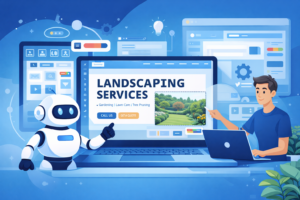
Understanding the AI Website Creation Process
Building a website with AI typically involves several stages. Each stage can be supported by different types of tools.
A typical AI website workflow includes:
-
Defining the business idea and website structure
-
Generating page content
-
Designing the website layout
-
Creating images and graphics
-
Optimising content for search engines
-
Publishing the website online
Rather than relying on one tool to do everything, most successful AI website builders combine several tools that specialise in different tasks.
AI Tools for Website Planning and Content Ideas
The first step in building a website is understanding what the website should contain. This includes defining services, identifying the target audience, and outlining the pages required.
AI assistants are often used at this stage because they can generate ideas quickly and help structure content.
Some widely used AI assistants include:
-
ChatGPT
-
Claude
-
Google Gemini
These tools can help users generate:
• website page outlines
• service descriptions
• homepage structures
• blog article ideas
• marketing copy
For example, an entrepreneur might ask an AI assistant:
“Create a homepage structure for a home cleaning business website.”
The AI may generate sections such as:
• hero headline
• services overview
• customer testimonials
• call-to-action sections
• contact information
These outlines can then be used as the foundation for the website.
AI Website Builders
Once the structure of the website is defined, the next step is creating the site itself. AI website builders can generate layouts automatically based on a short description of the business.
Some of the most popular AI website builders include:
-
Durable
-
Framer AI
-
Wix AI Website Builder
-
10Web AI Builder
These tools can generate a working website in minutes.
They typically create:
• homepage layouts
• service pages
• navigation menus
• contact forms
• design themes
Users can then customise the website further by editing text, adding images, and adjusting page sections.
AI website builders dramatically reduce the time required to create a professional-looking site.
AI Tools for Writing Website Content
Even when a website builder generates the page structure, content still needs to be written.
Website content explains services, builds trust with visitors, and encourages them to take action.
AI writing tools can help generate drafts for:
• homepage introductions
• service descriptions
• landing pages
• blog articles
• FAQs
Many businesses use AI-generated drafts as a starting point before refining the content manually.
However, the quality of the output depends heavily on how instructions are written. Clear prompts produce clearer results.
This is why many AI users eventually develop prompt libraries that guide AI tools to produce better content.
AI Tools for Images and Website Design
Images play an important role in how visitors perceive a website. A visually appealing website appears more professional and trustworthy.
AI image tools allow users to generate visuals without hiring a designer.
Some commonly used tools include:
-
Midjourney
-
DALL·E
-
Canva
These tools can generate:
• website banner images
• illustrations for services
• blog article graphics
• social media visuals
For small businesses and entrepreneurs, AI image tools can significantly reduce design costs.
AI Tools for SEO and Content Strategy
A website without search visibility will struggle to attract visitors. Search engine optimisation helps ensure that people can find the website through search engines.
SEO tools help identify topics people are searching for.
Examples include:
-
Ahrefs
-
Ubersuggest
-
Surfer SEO
These tools help users discover search questions such as:
• “How much does a CV writer cost?”
• “Is hiring a resume writer worth it?”
• “How do I improve my CV?”
Those questions can become blog articles that attract visitors to the website.
Creating useful articles around real search questions is one of the most effective ways to generate long-term traffic.
Website Hosting and Publishing
Once a website has been created, it must be hosted online so that visitors can access it.
Popular hosting platforms include:
-
Hostinger
-
Netlify
-
GitHub
These platforms allow users to:
• publish websites
• connect domain names
• manage website files
• ensure reliable website performance
Some hosting providers also include website builders and management tools that simplify the publishing process.
Why AI Website Workflows Matter
Although powerful tools exist, many users struggle because they experiment with them randomly.
Without a clear workflow, users may jump between tools without a structured process.
This can lead to:
• inconsistent content
• incomplete websites
• poor structure
• wasted time testing different tools
A structured workflow helps connect these tools into a logical process.
For example:
-
Use an AI assistant to plan the website structure.
-
Use AI writing tools to generate page content.
-
Use a website builder to create the layout.
-
Use AI image tools for visuals.
-
Use SEO tools to generate blog articles.
-
Publish the website through a hosting platform.
Following a workflow like this makes website creation faster and more reliable.
Our Website AI Prompt Pack and Workflow
For users who prefer a structured system rather than experimenting randomly, AI Working Hub provides a Website AI Prompt Pack and Workflow Guide.
This guide shows how to combine the tools described above into a practical workflow.
The prompt pack includes prompts for:
• website planning
• homepage generation
• service page creation
• blog article writing
• SEO optimisation
• call-to-action content
These prompts help guide AI tools to produce more structured and useful results.
Rather than replacing the tools themselves, the workflow helps users use them more effectively.
Learn the Tools First, Then Use the Workflow

Our approach is simple: understand the tools first, then apply the workflow.
Visitors are encouraged to experiment with the tools described on this page and explore how they work together.
Once the ecosystem becomes clear, structured prompts and workflows can dramatically speed up the process of building websites.
Artificial intelligence has made website creation more accessible than ever. With the right tools and guidance, individuals and organisations can build professional websites faster and more efficiently than traditional methods.
If you want to know more about how we can assist you, do not hesitate to contact us today.